A pair of soft lemons for two people who live apart. Squeeze yours, and wherever the other one is, it gives a gentle buzz. Squeeze back, and yours tells you they felt it.
How it works.
One gesture. No screen, no pairing, no instructions.
- 01
Squeeze.
Press it across its width. Both sides have to give at once, so it won't go off in a pocket or a bag.
- 02
It travels.
A built-in LTE-M modem sends a tiny encrypted message. No phone, no home WiFi.
- 03
They feel it.
Within about 20 seconds the other lemon buzzes. If nobody's holding it, a soft light waits until someone picks it up.
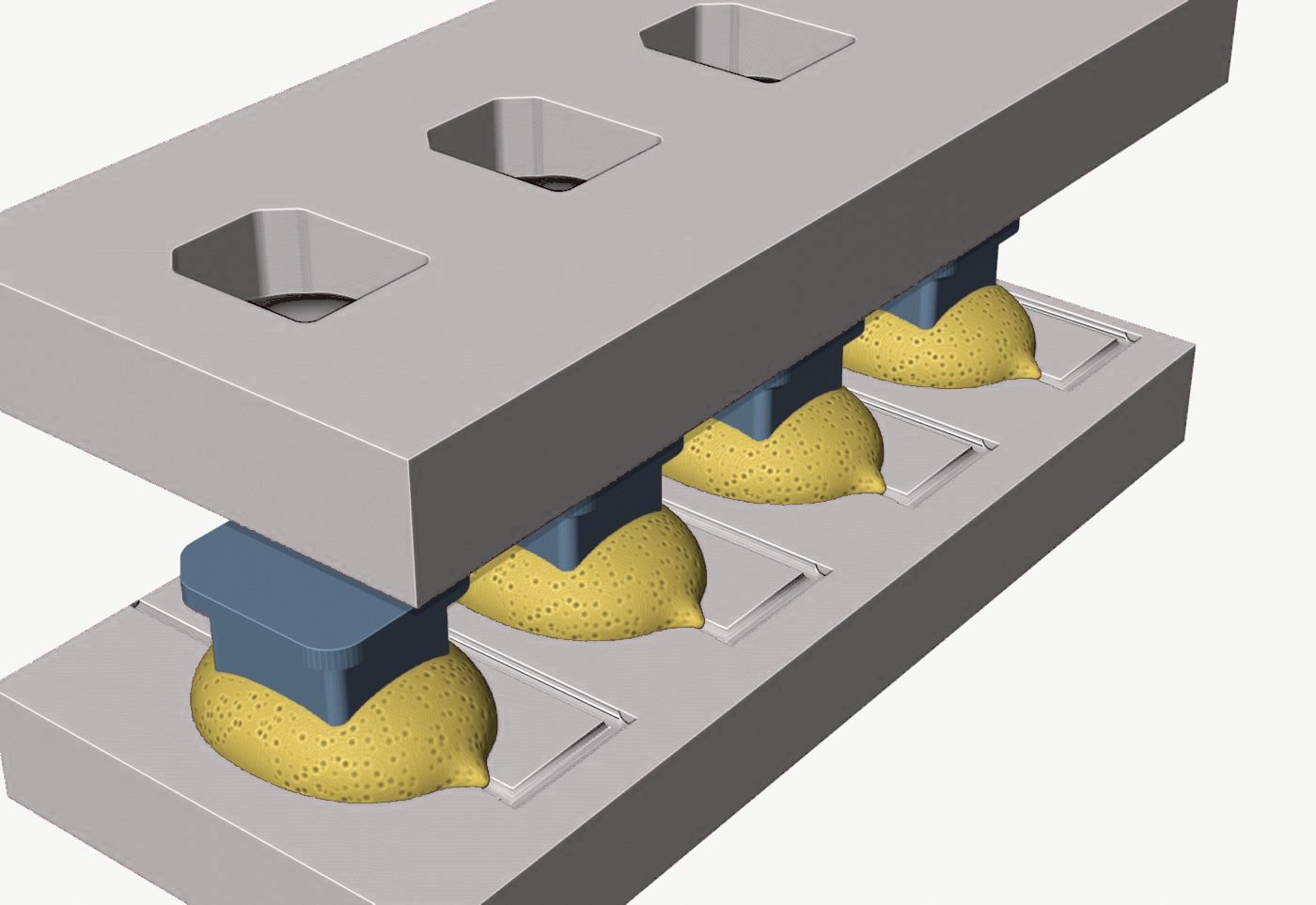
Cutaway of the first design (rev A): the skin presses two snap domes, the modem wakes, the partner buzzes.
Most connected things ask you to install, sign in and pair. Limonchito asks you to squeeze.
No phone.
The modem is inside. It works anywhere with mobile coverage.
No app.
Nothing to download, update or remember a password for.
No setup.
They arrive as a pair. Out of the box, they already know each other.
Designed to be held.
The size of an egg, lighter than one, and nothing to press but the lemon itself.
A peel you can feel.
Soft cast skin with a fine dimpled texture, smooth squeeze pads and a small moulded leaf that can't come off.
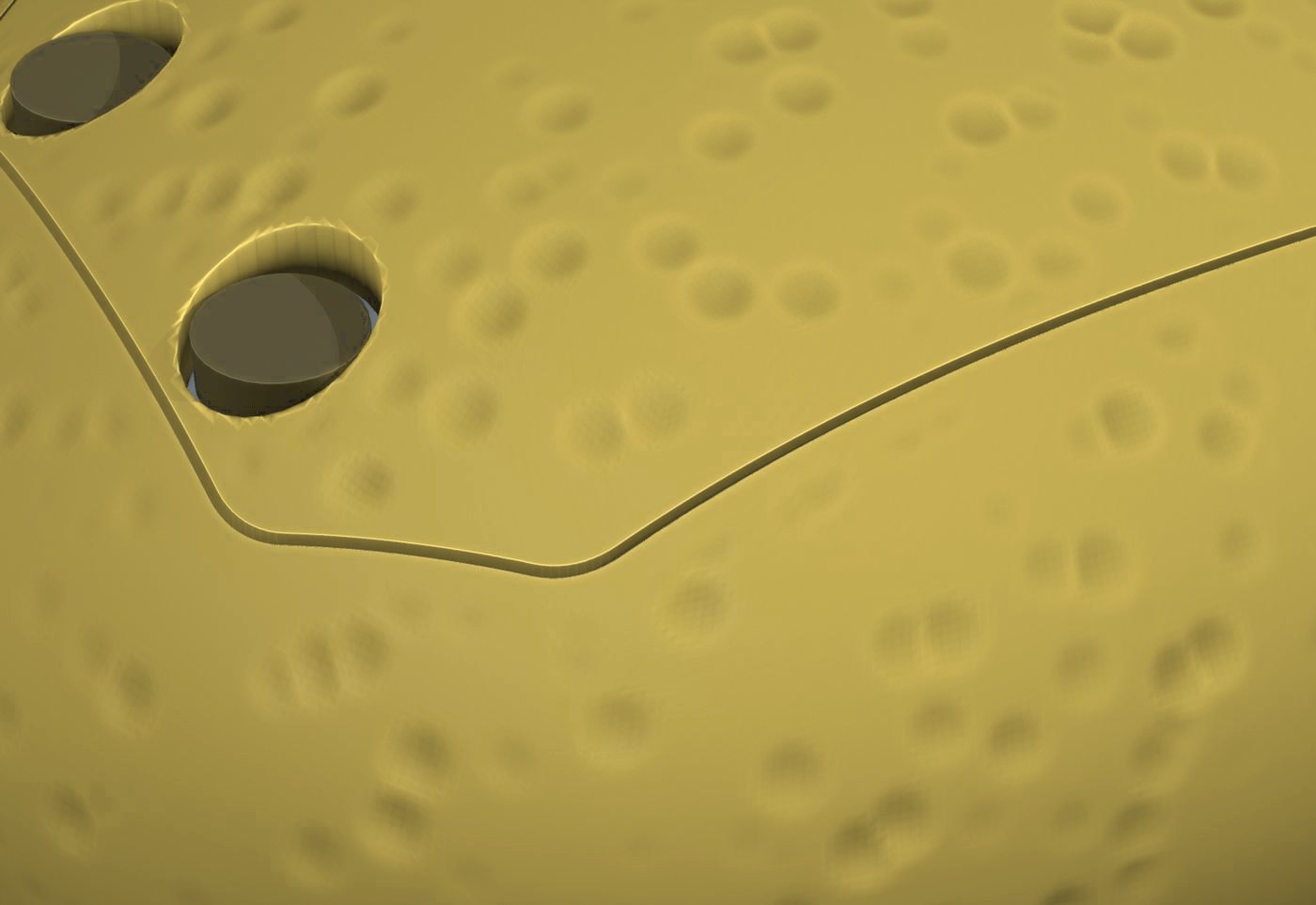
A battery you can replace.
Two screws, one plug, no glue. A charge lasts weeks, and when the cell is tired, you swap it.
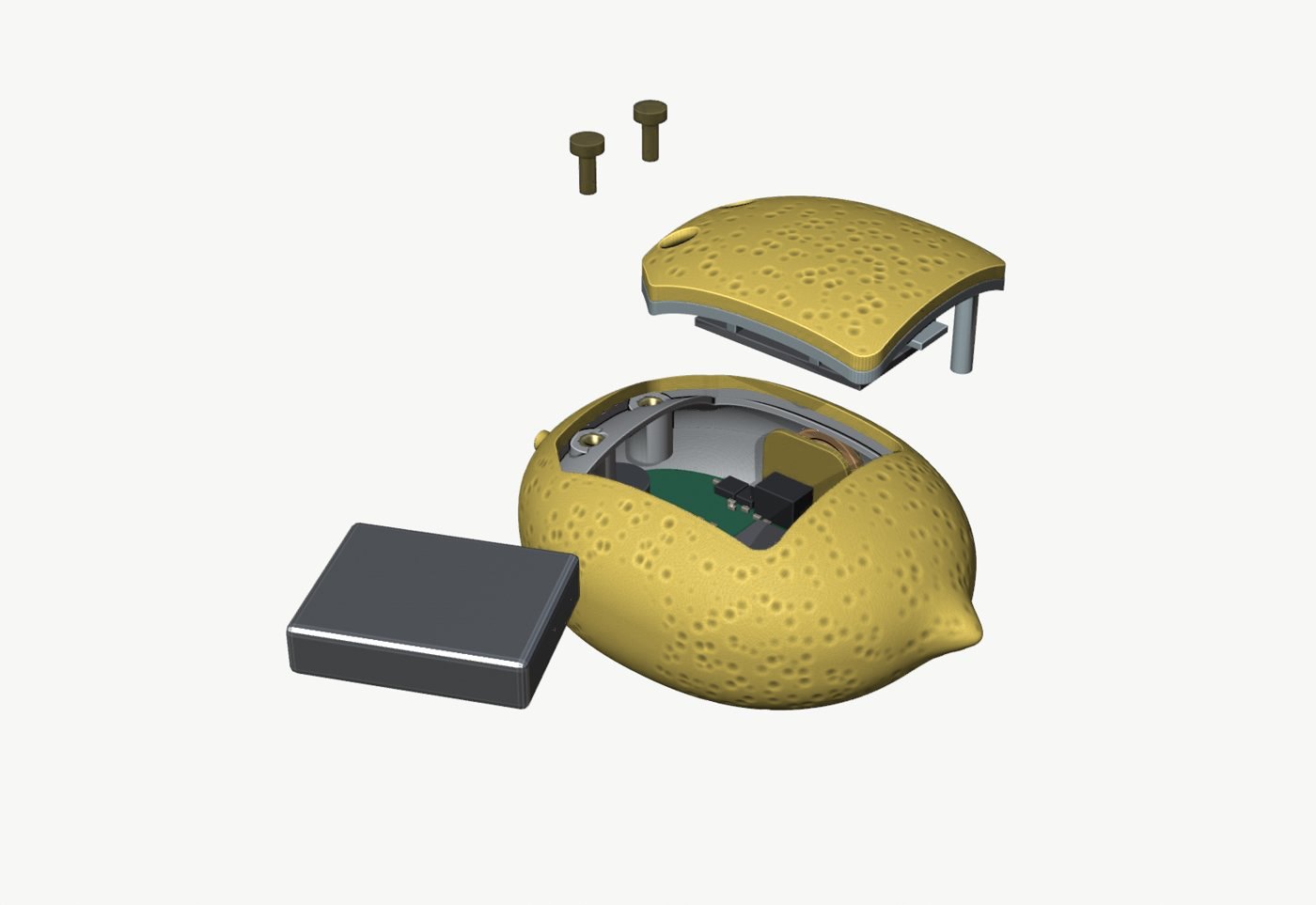
Rests on a leaf.
Set it in its cradle and it charges wirelessly. The leaf holds a certified Qi charger and lines the coil up for you.
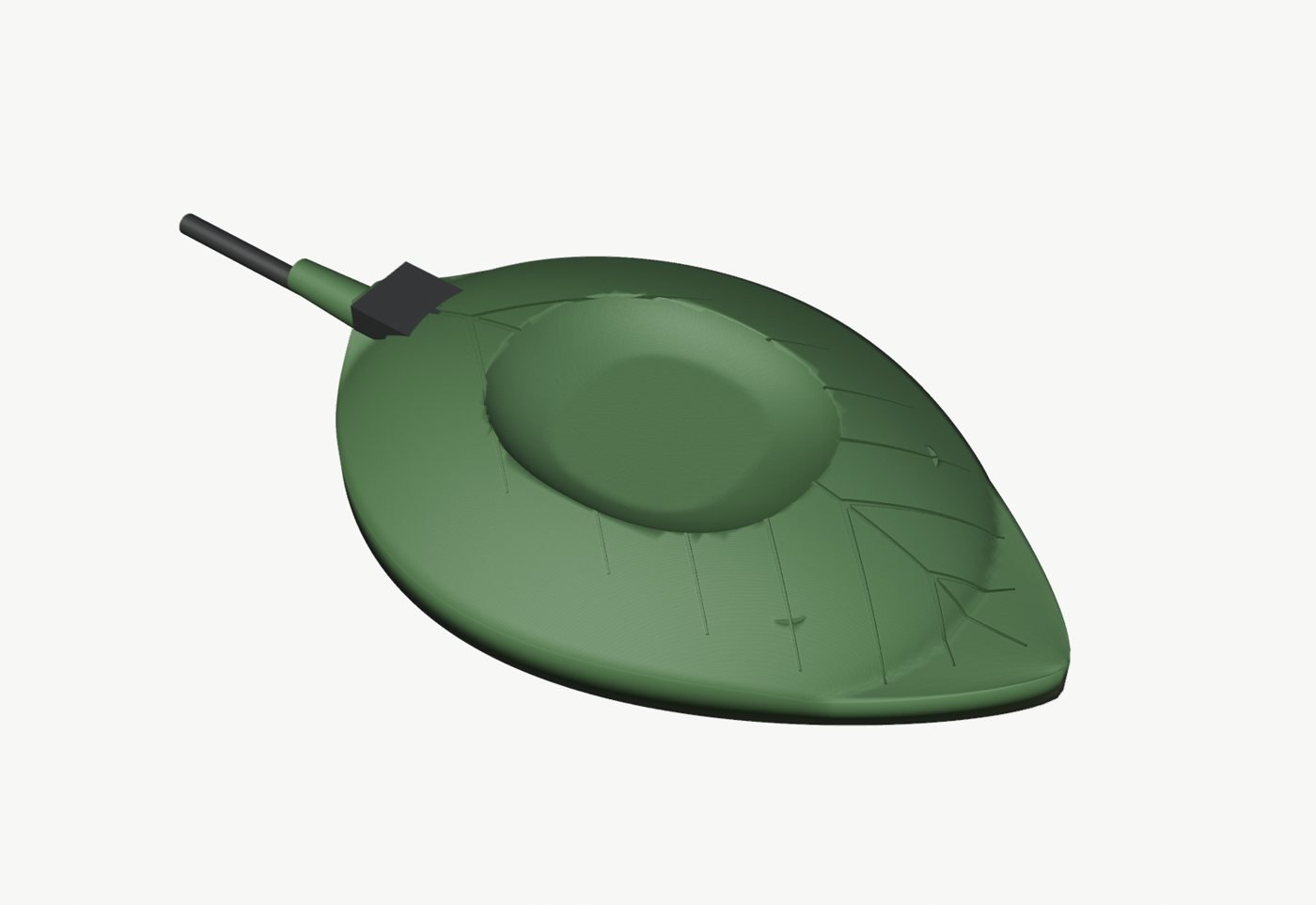
Everything, inside.
Modem, antenna, haptic motor, snap domes, light and battery, packed into a printed core under the skin.
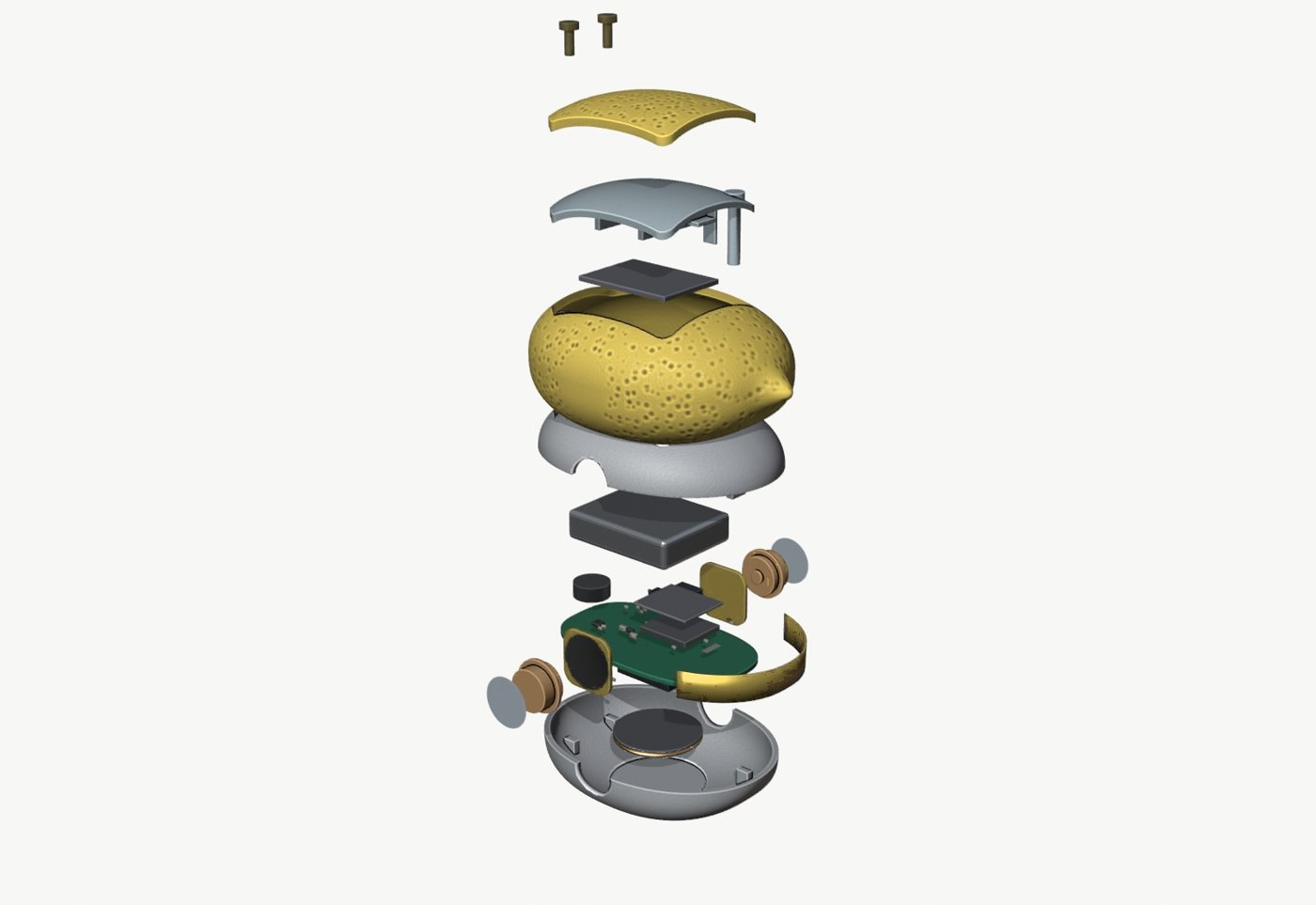
Made by hand, in batches of four.
Every skin is cast in our own silicone moulds from 3D-printed masters, then assembled in our workshop.
Tech specs.
Design revision B. Numbers are from our models and part datasheets; prototypes will confirm them.
Size and weight
- 64 × 44 × 27 mm
- About 32 g
Connection
- LTE-M, Nordic nRF9151
- 10-year IoT SIM, works across Europe
- Message delay up to ~20 s, to save battery
Squeeze
- Two snap domes, one each side
- Both must be pressed together: no pocket squeezes
Feel
- Linear haptic motor, DRV2605L driver
- Distinct patterns for "squeeze" and "they felt it"
Light
- Missed-squeeze light, glows through the skin
- Accelerometer turns it off when picked up
Battery
- 250 mAh lithium-polymer
- About 5–6 weeks per charge (estimate)
- User-replaceable: 2 screws and a connector
Charging
- Qi wireless
- Leaf cradle, or any Qi pad
Security
- Per-device keys and encrypted messages
- Locked debug port, signed firmware updates
Materials
- Cast polyurethane skin, printed resin core
Limonchito is a prototype and not for sale. It is not a toy.
Built in the open.
We're two students, so we spend in stages. Each one has to prove something before the next gets any money.
- Stage 0 · Next
A bench pair
≈ €300
Two development boards talk to each other. Test skins for the feel.
- Stage 1
Pilot: 5 pairs
≈ €2,900
Ten real lemons lent to five pairs of people for a month. We count squeezes. If they fade, we stop.
- Stage 2
Pre-orders
≈ €200
Photos and stories from the pilot. Nothing is made until enough people commit.
- Stage 3
First batch
Pre-order funded
EU certification and a batch of 250–400 pairs, sold in the Netherlands and Belgium first.
Budgets, go/no-go rules and every assumption are in the master plan
Build one with us.
Every file we have: shape, electronics, firmware, drawings. Nothing has been tested on hardware yet, so expect fixes.
- 3D print filesSTL: core, hatch, plungers, skin master, moulds, leaf cradle21 MB
- Technical drawings10 dimensioned sheets, PDF0.5 MB
- Drawings and DXF outlinesDXF, placement CSV, sheet images3.6 MB
- ElectronicsKiCad schematic, netlist, BOM with part numbers64 KB
- Firmware and servernRF Connect SDK firmware, relay server, factory script48 KB
- Blender modelThe .blend file and the scripts that generate it30 MB
- All documentsPlan, design, sourcing, compliance, assembly (Markdown)88 KB
- Squeeze cutaway film8 s, 1080p0.7 MB
Pilot
Live with a pair for a month.
We're looking for five pairs of people who live apart: grandparents and grandkids, couples, friends. Free to take part; we lend you the pair and learn from how you use it.
Ask for a pilot pairBack to the studio